10 formations, not one opening
Each side can start from a different named back rank, so the position in front of you is rarely the position you rehearsed.

It starts with the chess you know, then the Jester changes the strategy as pieces switch sides. Jump an enemy piece and it switches sides, fighting for you from where it stands.


What is What the Chess?
Your strongest piece can end the turn playing for your opponent.
Jester happens
A 10x8 board. Familiar pieces, plus two Jesters a side.
Silent 20-second loop. Every move and jump shown is legal under the current rules.
Why it is different
Less memorization. More adaptation.
Each side can start from a different named back rank, so the position in front of you is rarely the position you rehearsed.
A piece that switches sides is not just material lost. It is a threat that now points the other way, and the tactical picture changes with it.
Chess understanding still helps enormously. What gets tested hardest is reading a new position rather than recalling a known one.
Variety, counted
10
Each one a different back rank, not a reskin.
100
Up to this many, when both sides choose independently among the 10.
24,000
For each player, under the Custom Build rules.
576 million
Because both players choose a Custom Build back rank independently: 24,000 × 24,000.
Every formation is a genuinely different back rank. See how setup works.
Two ways to play
Free in your browser. No account needed to start.
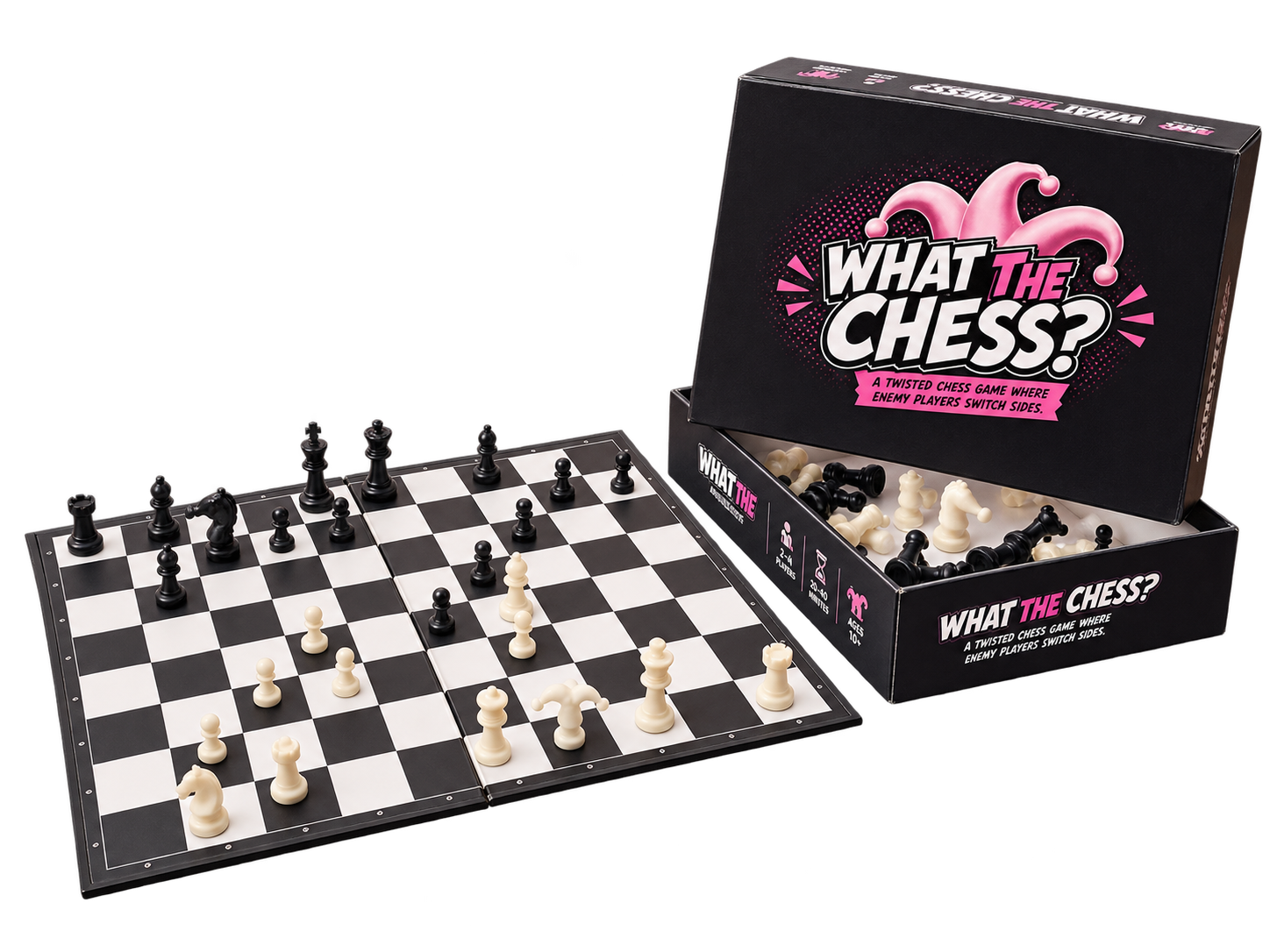
Physical game interest
How it plays
One
Choose from the 10 named formations or use Custom Build on the 10-by-8 board.
Two
Kings, queens, rooks, bishops, knights and pawns behave the way you expect them to.
Three
The Jester jumps over an adjacent piece to the empty square beyond. When it jumps an enemy piece, that piece changes allegiance and joins the Jester’s side.